Showing posts with label wildflowers. Show all posts

Wednesday, May 27, 2020

Let's go "bugging"!

I believe the major reason people tend to be largely ignorant about the number and diversity of bugs in their midst is that they simply don't see them. Let's face it - bugs are small. If you would ask the average person to describe the bugs in their backyard on any given day in the summer, they would probably come back with a list of mosquitoes, flies, bees, butterflies...maybe a moth or a wasp. My guess is that there are dozens of bugs present but people just aren't aware they are there.

Golden-haired flower beetle
I think we should start a new pastime - Bugging! Lots of people go out into nature to look for birds. They are "birders" going "birding". Their goal may be to photograph the beautiful flying creatures or to check off a new species on a list they faithfully keep or simply to enjoy the color and complexity of each unique bird. Why can't we do the same thing with bugs?

Agapostemon Bee
One of my favorite activities for kids (or adults) is "bug bingo". Each participant gets a card with a mixture of names of common bugs: bee, butterfly, caterpillar, ant, etc. As you hike along a trail or explore an area, each participant tries to fill their card first by spotting the listed insect before anyone else. It is a fun event that is also educational. I think we should expand the idea and create checklists of bugs that can be found in a particular area and encourage anyone exploring to try to fill in their checklist with their sightings for the day.

Maybe if people were more used to looking for bugs in their midst, they would start to become aware of just how many there are and how beautiful each one is!


Metallic wood boring beetle

Sunday, June 24, 2018

Butterflies and Wildflowers

One of the great things about growing old is that every year I realize how little I know. I figure that as long as I have so much still to learn, life will continue to be an adventure!

I have never found a reference book I really like for butterflies and moths of Wyoming and there seems to be little information on the web about these particular creatures in this area. We have lots of Fritillaries and Suphurs along with our share of Checkerspots and Wyoming Satyrs. We also see the occasional Painted Lady, Swallowtails and Question Marks but this year the biggest groups seem to be the Coppers and the Blues, both members of the "Little Butterflies" family. The range of colors of these tiny butterflies is amazing. Over the last couple days alone I have photographed at least three distinct patterns. 
Blue on Cota

Cota Flower
 The other discovery this year was Cota or Navajo Tea. I probably would never have noticed it if it wasn't for the Blues seeming to find it irresistible. At first I thought it was the remnant of a rayed flower but a little research convinced me the tiny yellow bloom is all there is. It is easy to overlook but the closer you study it, the more fascinating it appears.

Unlike butterfly books, I have a variety of wildflower references I find invaluable. Surprisingly, one I find extremely helpful is a book of flowers of the Texas Plains that I stumbled into a number of years ago. I have identified a large number of wildflowers on our property, including Cota, from the Texas book. These are plants that are usually not identified in books on Wyoming wildflowers.
Cota Plant

Blue on blooming sage

Blue variation

Monday, June 18, 2018

Cacti

 Despite the fact that we live in high desert - or maybe because of it - the wildflowers of spring are always a treat. This has been an exceptional year so far because of an unusual amount of moisture that is still falling today.

One of the classic desert plants is cactus. We have two varieties on our place: Prickly Pear, which makes up about 99.99% of the spiny species and Cushion Nipple Cactus, which makes up the other .01%.

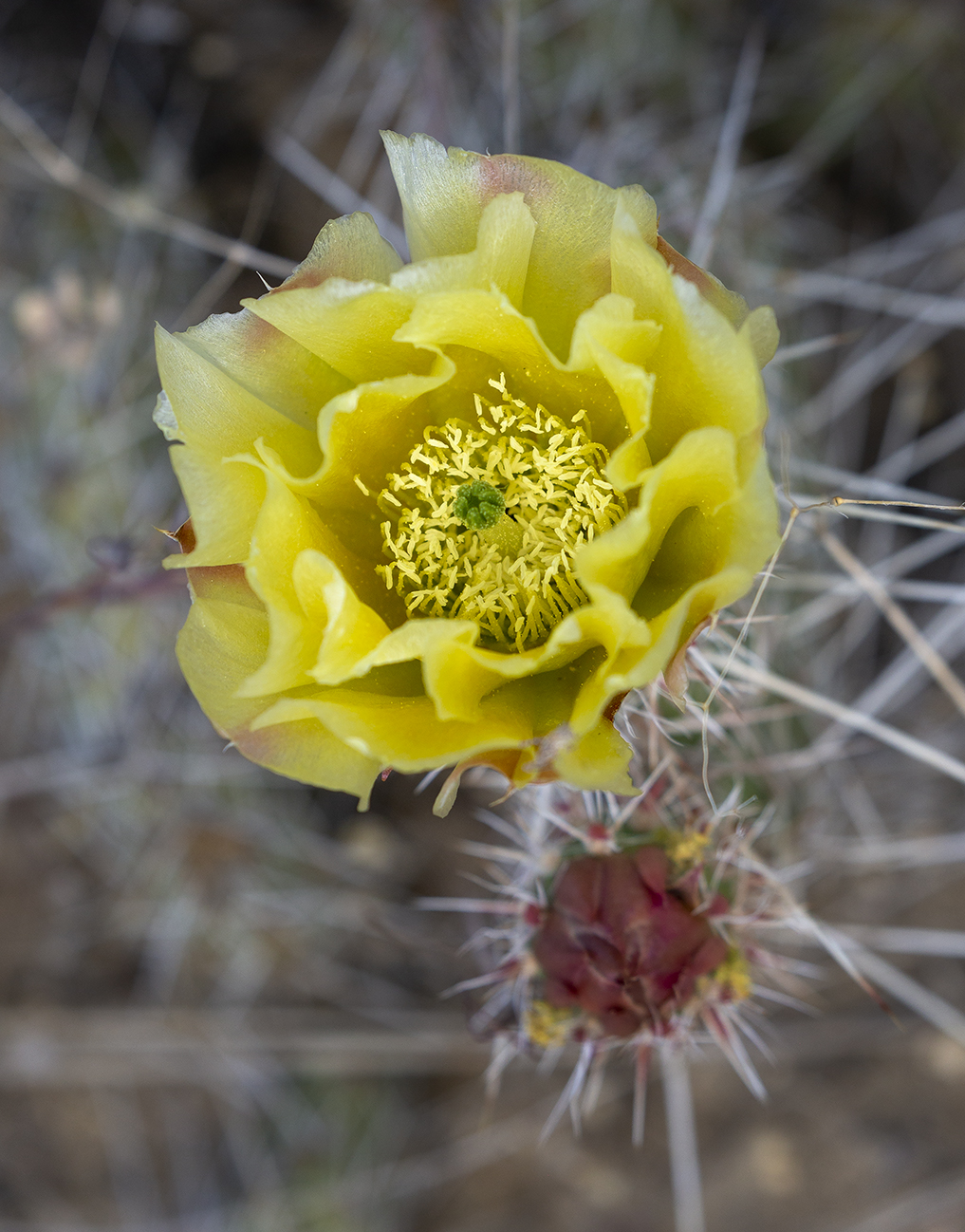
The Prickly Pear are just starting to bloom and like everything else this year, they are amazing.

The flowers are usually yellow although we have a certain number that are salmon colored or somewhere in between.

 The blooms on the Cushion Nipple Cacti are much smaller and they seem to last for only a day or two (no wonder there are so few of them!) so it is tricky to catch them at just the right time. The amazing thing about their flowers is the coloration which makes them appear to glow from within.